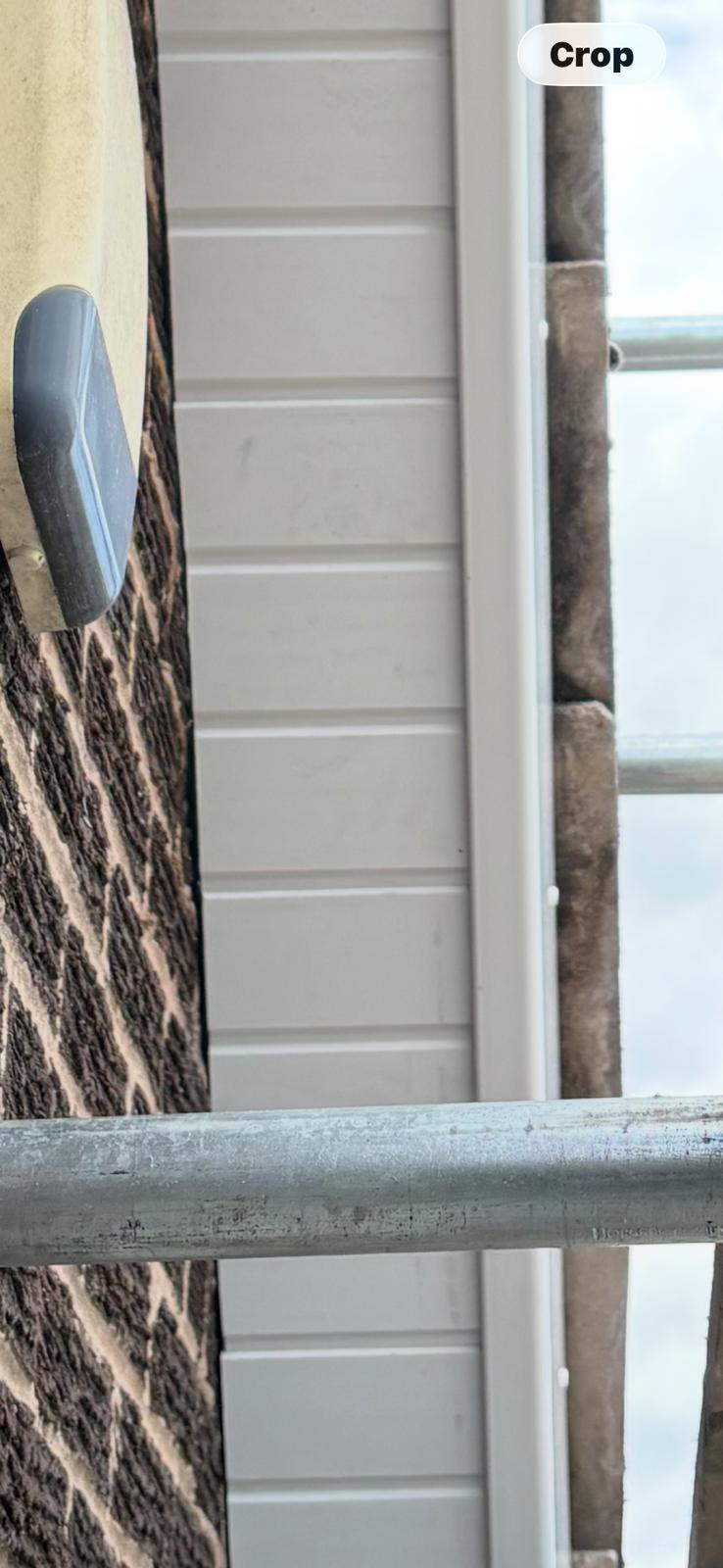
Birds And Wasps Getting In Under The Roof Eaves
Birds and wasps getting in at the eaves means there is a gap where the roof meets the wall. The gap is the problem and the wildlife is the symptom. There is also a legal dimension here that catches people out: an active nest is protected, and the timing of any work has to respect that.
Key takeaways
- Wild bird nests in use are legally protected in the UK. Blocking access to an active nest is an offence.
- The window for eaves work is generally outside the main breeding season, so late summer through to late winter.
- The gap birds use is often a genuine roof defect: a missing bottom tile, a rotted fascia, or a failed soffit joint.
- Blocking the gap without checking what is inside can trap birds or a wasp nest in the roof space.
- Ventilation must be preserved. Sealing the eaves solid causes condensation in the loft.
Where the gap actually is
At the bottom edge of a roof, the rafters project over the wall and are closed in by a fascia board at the front and a soffit board underneath. The tiles or slates start just above. There are several places a gap can open in that assembly: where the soffit meets the wall, where two soffit boards join, where the fascia has rotted and pulled away, behind the first course of tiles if the eaves detail was poorly formed, and around any pipe or cable passing through. Starlings and house sparrows in particular need only a small opening and are very good at finding one, which is why the presence of birds is a reliable indicator that something has opened up.
The law, which genuinely matters here
Under the Wildlife and Countryside Act 1981 it is an offence to intentionally damage or destroy the nest of a wild bird while it is in use or being built, or to prevent parent birds from reaching it. That applies to the common species that nest in eaves, and some species have additional protection. In practice this means that once birds are going in and out with nesting material or food, the work waits. It is not a technicality: prosecutions do happen, and a contractor who offers to block it up during the breeding season is offering to break the law on your behalf. The main breeding season runs broadly from March to August, with variation by species and by year.
When the work can be done
The practical window is once the nest is genuinely finished with, which usually means late summer onwards, and before the following spring. Late summer through to late winter is the sensible period for eaves repairs, bird proofing and any fascia or soffit renewal. Autumn has an additional advantage in that it coincides with the time gutters need clearing anyway, so the access can do two jobs. If you find the problem in April, the honest answer is usually that the repair waits until the birds have finished, and that the intervening months are an opportunity to get the work quoted and booked rather than lost time.
Wasps are a different question
Wasp nests in a roof space are not protected in the way bird nests are, and a large nest is a genuine hazard to anyone working at the eaves, so it usually needs dealing with before roofing work rather than during it. Wasps abandon a nest at the end of the season and do not reuse the old one, so an inactive nest from a previous year is not a reason for concern beyond removing it. The thing not to do is seal the entry point while a nest is active inside, because the colony will look for another way out, and that is frequently into the house. Treatment first, then proofing, in that order.
Not sure what you need? Call and we'll tell you straight.
150+ Google reviews. Dave has 25 years on the tools.
What the birds are telling you about the roof
It is worth resisting the urge to treat this purely as a wildlife problem, because the opening is usually a roof defect that would matter even if nothing had moved in. A rotted fascia means water has been getting behind the gutter for years. A gap where the soffit meets the wall means the eaves detail has failed or was never closed. A missing or displaced bottom course tile means the most exposed row on the roof has been disturbed. Each of those admits wind driven rain as well as birds, and each will let heat out and moist air in. So the sensible scope is to repair the eaves properly rather than to plug a hole.
The ventilation trap
Here is the mistake that causes a second problem a year later. The eaves are usually where the roof space draws its air, either through an open gap or through purpose made vents. Somebody arrives to stop the birds getting in, fills the entire eaves line with expanding foam or mortar, and the loft stops breathing. The following winter the owner has condensation, damp insulation and mould on the roof timbers, and no obvious connection to the work done the previous autumn. Proofing at the eaves has to maintain airflow, which means using comb filler, mesh or purpose made vent products that exclude birds while passing air, rather than sealing solid.
Letting the calendar decide the timing
Rarely urgent, and often the law dictates the timing anyway. The exception is a wasp nest in an accessible position near a doorway or a garden that is in use, which is a safety matter and should be handled promptly by someone equipped for it. Otherwise this is a job to plan for the right season. Where it does creep up the list is if the eaves damage is extensive: rotten fascia over a long run, soffits that have come away, or a bottom course of tiles that has dropped. At that point the eaves are not just admitting birds, they are failing to do the job of keeping water out of the top of the wall.
What a proper eaves repair includes
Inspection of the fascia and soffit for rot, replacement of any failed sections rather than painting over them, checking the state of the bottom course of tiles and the underlay where it should dress into the gutter, restoring or fitting eaves ventilation, and then proofing against birds using mesh or comb rather than sealant. If the gutter is coming off to do the work, that is also the moment to check the brackets and the fall, since it is the same access. Ask specifically how ventilation will be maintained after proofing, because that question separates a repair that solves one problem from a repair that swaps it for another. If the fascia and soffit are being replaced rather than repaired, it is also the moment to decide between timber and a plastic alternative. Timber suits a period property and needs repainting on a cycle. Plastic needs no decoration and lasts well, though it does not suit every building and cannot simply be nailed over rotten timber, which is a shortcut worth refusing. On a listed building or in a conservation area the choice may not be yours to make, so that is worth establishing before anything is ordered.
Frequently Asked Questions
Related services
More from the blog
About the author
David Boardman founded Boardman Roofing in 2018. Dave has 25 years on the tools. Read 150+ Google reviews or call 07879 736629.
Get a free quote today
150+ Google reviews. Dave has 25 years on the tools.
Have a roof problem you want a real roofer to look at? Free written quote, no pressure.