Slate and Tile Roof Repairs in Manchester
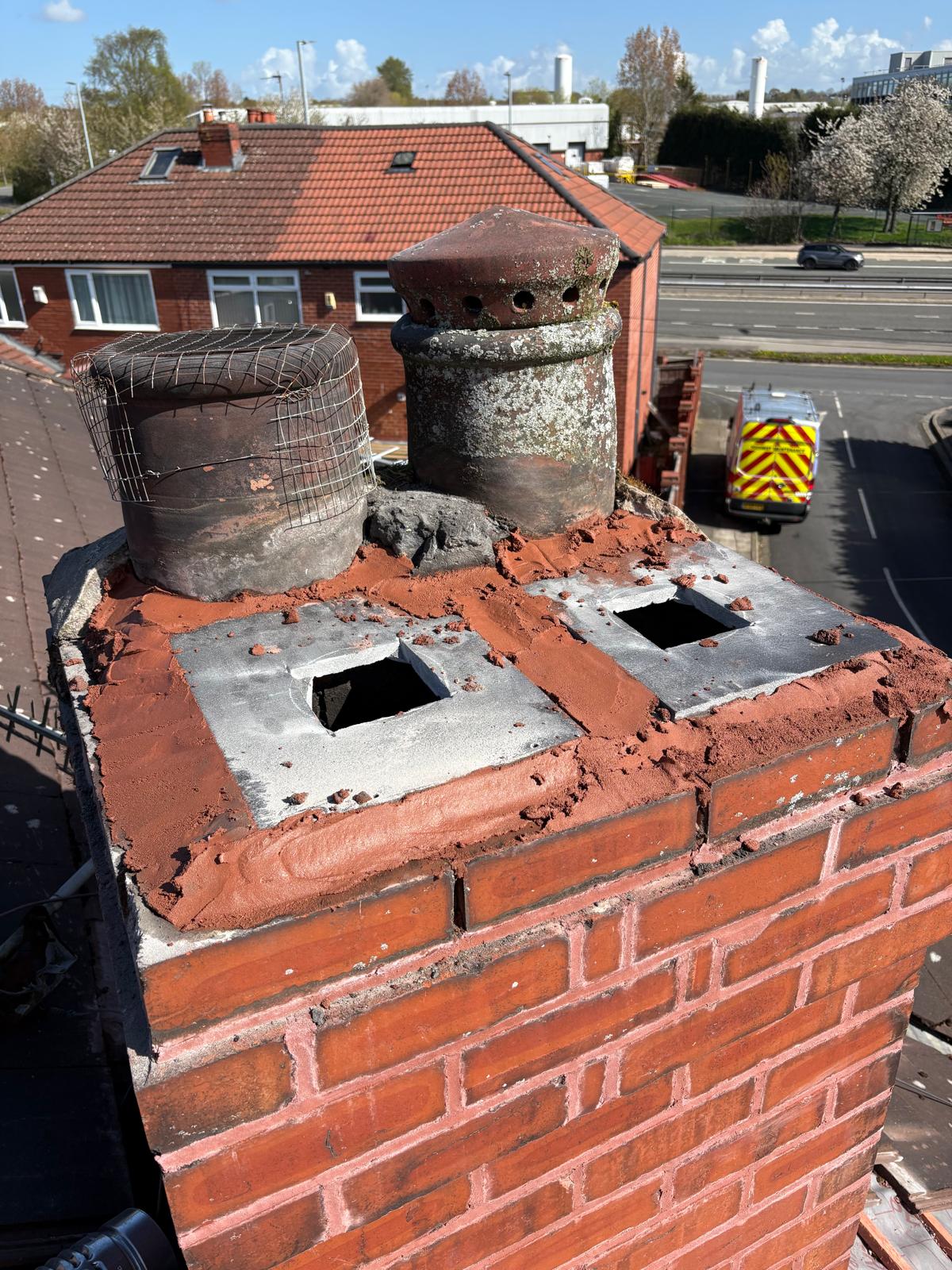
A slate on the path after a gale, a gap in the courses you can see from the pavement, or cement crumbling off the ridge into the gutter. None of it means the roof is finished. Slate and tile roofs fail at their details long before the covering gives up: the fixings, the mortar at ridge and verge, and the lead in the valleys. We refix slipped, cracked and missing slates and tiles, rebed or dry fix ridge and verge and renew valleys, on Welsh slate, clay and concrete tile alike. Dave goes up and looks before he says anything, and you get a free written quote.
Free written quote with no obligation.
How a slate or tile roof lets go, in order
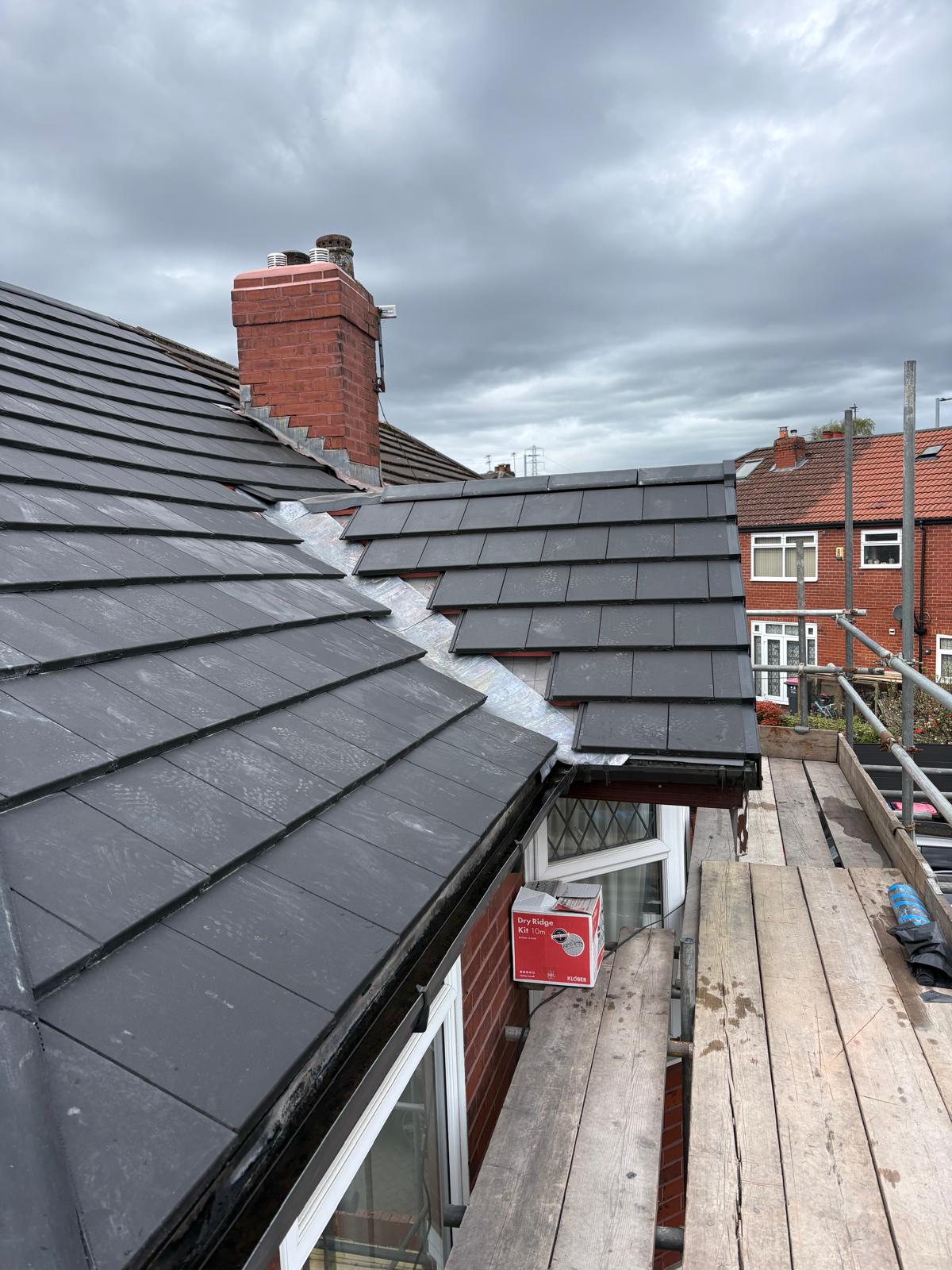
It nearly always runs the same way. Mortar goes first, because it was never going to last as long as the covering. The ridge bedding cracks along its length, then the verge mortar at the gable lets go and end tiles start lifting in wind. Water past a cracked ridge lands on the felt, and old bitumen felt is brittle, so it tears at the wall plate. Then the fixings. Nails corrode, the head fails, and a slate creeps down the pitch until it catches or comes off. Once one has gone the two beside it have lost their side lap, which is why we find them leaving in twos and threes.
How to read your own roof from the ground
Stand across the road with the light behind you and look along the courses rather than at them. A slipped slate shows as a dark step in a line that should be straight, a missing one as a black rectangle. Look at the ridge end on for a crack along the bedding, and at the gable for mortar dropping into the gutter. Then get in the loft on a bright day with the light off. Daylight through the covering, or dark tide marks down a rafter, tells us where water is getting in. Do not go up a ladder to check. A roof stays slippery long after it looks dry.
What happens if it is left
One slipped slate is a small hole in a large surface, and the felt underneath copes for a while. That is why the leak turns up months after the gale. The felt tears, the batten under it stays wet and rots, and the nail holding the next slate has nothing to bite on. Inside, the stain appears well away from the fault, because water runs along a batten and down a rafter before it drips. Leave it another winter and we are replacing battens, felt and covering instead of one slate.
Ridge, verge and valley, the details that fail first
Ridge tiles were traditionally bedded on mortar, and mortar shrinks, cracks and lets go. The current standard, BS 5534, expects ridge and hip to be mechanically fixed rather than bedded alone. A dry ridge does that: a ventilated roll along the apex and a fixing through every tile into a batten. Dry verge is the same at the gable, a clip over each end tile instead of a mortar fillet. We fit both, and we still bed in mortar where the property calls for it. Valleys are the third: lead splits along the fold where it has been laid too long in one piece and cannot move. What we will not do is smear cement over a cracked ridge or bed a slipped slate back on mastic. Both hide the fault for a season and both mean paying twice.
Not sure what you need? Call and we'll tell you straight.
150+ Google reviews. Dave has 25 years on the tools.
Nail sickness, and why it changes the answer
Nail sickness is the trade name for a roof whose slates are sound but whose nails are not. On the terraces round here the slate is usually still good after a century and the nails are corroded through. The tell is the pattern, not the damage. One slate off after a storm is a slate. Two or three coming down after every gale, from different parts of the pitch, is the fixings. We can hold a slate back with a copper tingle, and on a roof with life left that is honest work. On a nail sick roof it buys a season. When that is what we find we say so, and the job becomes a strip and recover rather than a repair. Dave will put a free written quote in front of you for either route.
Manchester roofs, and what is actually on them
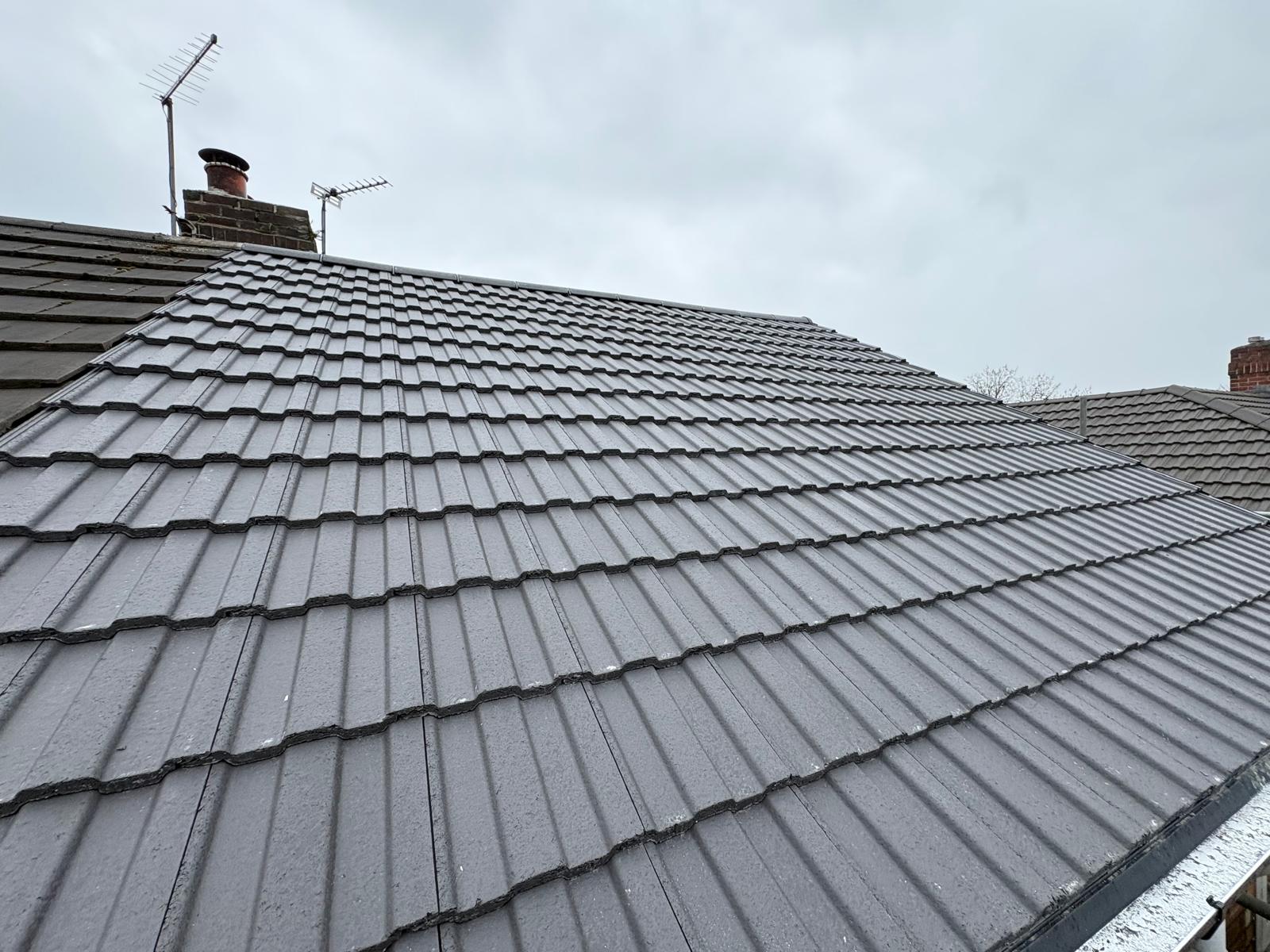
The Victorian terraces off Chorley Road in Swinton, along Monton Road and Parrin Lane and around Patricroft in Eccles are Welsh slate on softwood battens, and they are the nail sickness stock. The 1930s semis on Bury Old Road, Moorside Road and Plodder Lane carry clay plain tile or early concrete interlocking, and there it is the ridge and verge mortar that goes first. The estates towards Walkden and Little Hulton are mostly Marley and Redland concrete, porous now and holding water rather than shedding it. Bury town centre is different again: dark stone slate in diminishing courses, far heavier and traditionally hung on pegs rather than nailed. We salvage off the roof itself wherever the courses allow.
Repair or replace, and what affects the price
Repair is right when the covering has life in it and the fault is local: a few slipped slates, a cracked ridge, a split valley, a verge that has lost its mortar. Replacement is the answer when the fixings have gone across a whole pitch, when the battens crumble in your hand, or when the tiles are delaminating. What moves the figure is the pitch and the height of that elevation, whether we can work off a roof ladder or need a tower, and whether the covering is a stock profile or a discontinued one to be found reclaimed. Dave sets it out in a free written quote and there is no obligation on it.
Areas we cover for slate and tile roof repairs
Related services
Guides on this work
Frequently Asked Questions
Get a free quote today
150+ Google reviews. Dave has 25 years on the tools.
Free written quote with no obligation.