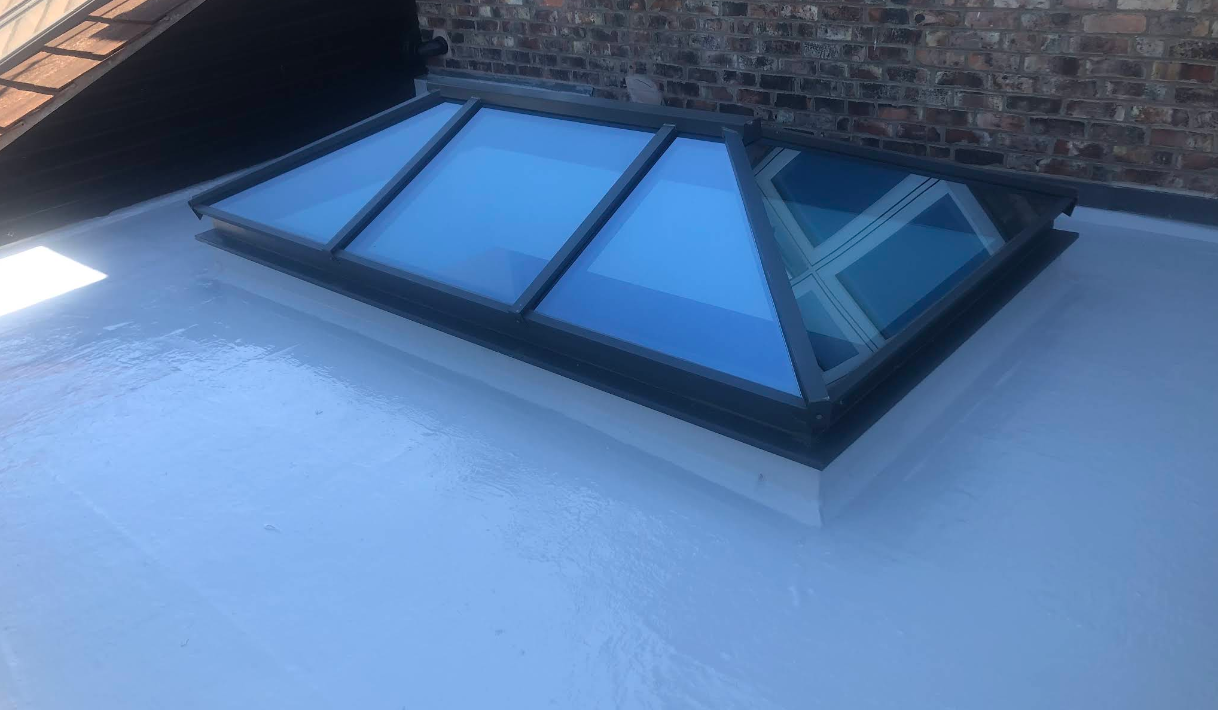
Conservatory Leaking At The Ridge
The ridge is where conservatory roofs fail first. It is the highest point, it holds the two roof slopes together, and it relies on gaskets and end caps that harden and shrink over time. Once they go, heavy rain finds the gap and runs straight down the inside of the glazing bars.
Key takeaways
- Conservatory roofs are assembled from components with seals, not built like a house roof. Seals have a service life of roughly ten to fifteen years.
- The ridge end caps are the single most common failure point, and they are also among the cheapest parts to replace.
- Water running down the inside of a glazing bar has usually entered above it at the ridge, not through the panel it appears on.
- Heavy rain reveals ridge faults that ordinary rain does not, because volume overwhelms a marginal seal.
- Most ridge leaks are a repair, not a new roof, whatever a replacement conservatory salesperson tells you.
How a conservatory roof is actually put together
Unlike a tiled roof, which sheds water by overlapping solid components, a conservatory roof is an engineered assembly. Aluminium or plastic glazing bars run from the ridge down to the eaves beam, panels of glass or polycarbonate sit between them, and rubber gaskets clamp the panels in place and keep water out. At the top, a ridge section joins the two slopes and is closed at each end with a cap. Every one of those junctions depends on a seal, and seals are consumable parts. They harden with ultraviolet exposure, they shrink, and they lose the compression that made them watertight. A conservatory roof at fifteen years old with original gaskets is not defective so much as due.
Why the ridge specifically
The ridge takes more punishment than any other part. It is fully exposed to sun, which is what degrades rubber and plastic fastest, and it sits at the point of greatest thermal movement, because the whole roof expands and contracts around it through the day. It also has the most complex geometry: two slopes, a horizontal section, and end caps that have to seal against both. Every additional joint is another opportunity, and the ridge has the most joints in the smallest area. The end caps in particular are often simply clipped or screwed on with a bead of sealant behind them, and once that sealant has failed there is a direct opening into the top of the roof.
Why it only leaks in heavy rain
A marginal seal handles a light shower without difficulty and fails when volume and wind pressure exceed what it can hold back. That is why the classic complaint is a conservatory that is fine for months and then drips through one bad storm. It is also why inspecting in dry weather can be inconclusive: the components look intact because they are intact, and the failure is in their ability to compress and seal rather than in anything visibly broken. Photographing or filming during heavy rain, from inside, showing exactly where the water first appears, is far more useful than an inspection afterwards.
Where the water appears versus where it enters
Water entering at the ridge runs down the inside of a glazing bar, because the bar is the lowest and most direct path, and it emerges wherever that bar has a joint, a fixing or an end. This means the drip almost always appears well down the roof, often at the eaves beam or at a bar junction halfway down, some distance from the actual fault. People consequently ask for the panel above the drip to be resealed, and it changes nothing. The rule of thumb worth remembering is that water in a conservatory roof appears at the bottom of its journey, so the search should always start above where it shows.
Not sure what you need? Call and we'll tell you straight.
150+ Google reviews. Dave has 25 years on the tools.
Polycarbonate, and the problem with its ends
Polycarbonate roofing is multiwall, meaning it has hollow flutes running down its length, and those flutes must be sealed at the top with solid tape and at the bottom with vented tape so that any water that gets in can drain out. If the tapes have perished or were never fitted properly, the flutes fill with water and debris, which is why old polycarbonate roofs go green and streaky inside the panels. That trapped water can then find its way out at the ridge or at a bar. If your panels have visible green or black staining within the flutes, the tapes have failed, and no amount of resealing the ridge will drain what is already sitting inside the sheets.
What to check from inside
During rain, watch where the first drip forms and follow the wet line upward as far as you can see. Check whether the water is running along a glazing bar or falling from a panel joint. In dry weather, look up at the ridge from inside and check whether daylight is visible at either end cap, which indicates a gap. Look at the gaskets along the bars for shrinkage, meaning the rubber has pulled back from the corners leaving a visible gap. Look at the polycarbonate flutes for staining. All of this is possible standing in the conservatory. Do not climb onto a conservatory roof under any circumstances, because these roofs are not designed to carry weight and people fall through them every year.
How much of a hurry to be in
A conservatory leak is rarely an emergency in the way a main roof leak can be, because the room below is usually a room you can close the door on. It can wait for settled weather, which is genuinely better for resealing work since sealants need dry clean surfaces to bond. Deal with it sooner if water is reaching electrics, if it is running onto a timber floor that will swell, or if the leak is at the wall junction rather than the ridge, since that puts water into the house structure rather than the conservatory. If a roof has multiple leaks in different places rather than one, that is a signal the whole seal system has reached the end of its life and piecemeal repairs will not keep up.
Repair, reseal or replace
In order of cost: replacing failed end caps and specific gaskets is a modest job and fixes a large share of ridge leaks. A full reseal, replacing all the gaskets and tapes on a roof whose frame and panels are sound, is a bigger job but far cheaper than a new roof and often the right answer at the fifteen year mark. Replacing polycarbonate panels with new sheets and correct tapes makes sense when the existing sheets have gone brittle or are full of algae. A new roof only becomes the sensible answer when the frame itself has failed, or when the owner wants a different kind of room, which is a comfort decision rather than a leak decision. Be cautious with any assessment that jumps straight to replacement without first identifying which seal has failed. It is also worth knowing that swapping a glass or polycarbonate roof for a solid insulated one is a different kind of project entirely. It changes the weight carried by the existing frame and base, and it usually brings building control into the conversation, so it should be considered on its own merits rather than as a way of curing a leak.
Frequently Asked Questions
Related services
More from the blog
About the author
David Boardman founded Boardman Roofing in 2018. Dave has 25 years on the tools. Read 150+ Google reviews or call 07879 736629.
Get a free quote today
150+ Google reviews. Dave has 25 years on the tools.
Have a roof problem you want a real roofer to look at? Free written quote, no pressure.