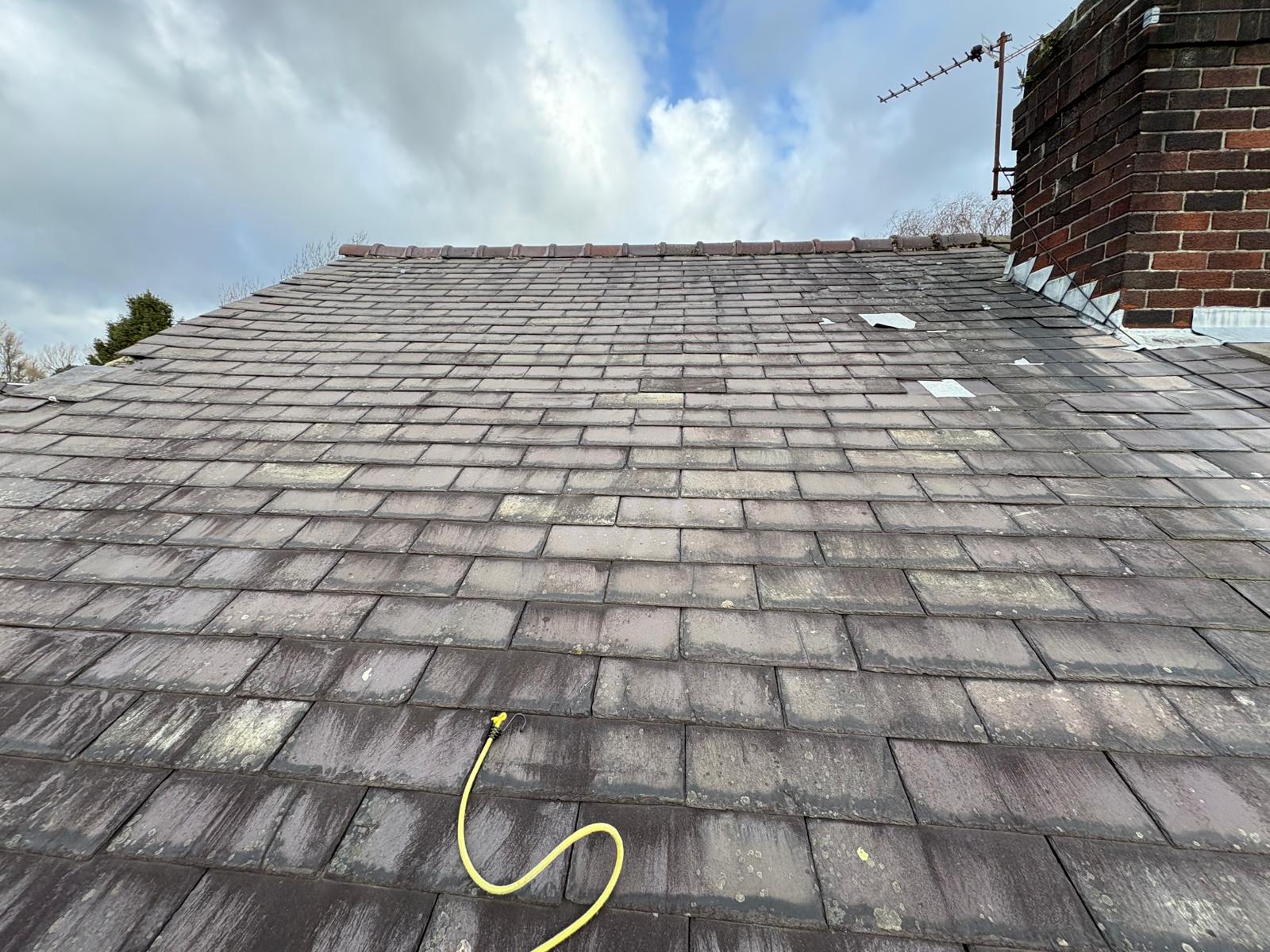
Winter Roof Checklist For A UK Home
Winter does not so much damage a roof as reveal and accelerate what was already wrong with it. Cold turns water in a crack into a wedge, wind finds anything that is no longer held down, and a house that is warm inside and cold above starts producing its own moisture problems.
Key takeaways
- The damage is done by ice forming inside things, which is why it shows up in bedding and in absorbent surfaces rather than in a covering that is still in good order.
- Winter is a monitoring season rather than a repair season, because conditions prevent most work being done well.
- Condensation problems start now, and they look like leaks without being leaks.
- Lying snow loads the structure, and a thaw that refreezes overnight can drive water upward beneath the laps.
- Keep a dated record of anything that appears, because spring is when it gets acted on.
What the cold actually does
Ice occupies more space than the water it came from, so anything holding moisture in its pores or in a fissure is being prised apart every time the temperature drops far enough. A single night achieves almost nothing measurable. A season of them removes the face of a mortar joint, lifts the skin off a brick, and turns a line you could barely see into an opening. The process is invisible while it happens and obvious once spring arrives. Coverings that take up very little moisture in the first place escape it almost entirely, which is a large part of why the traditional materials in this region have endured.
Why winter is for watching, not fixing
Most roofing work needs conditions that winter does not provide. Mortar needs temperatures above a certain level to cure properly and will fail if it freezes before it has set. Adhesives and sealants need dry, clean, warm enough surfaces to bond. Working at height in wind is restricted for good reason, and short daylight compresses the working day. A repair carried out in January in poor conditions is frequently a repair that has to be done again. The exceptions are genuine emergencies and temporary make safe work, where the objective is stopping water and removing hazards rather than achieving a lasting result.
Condensation season begins
The most common winter roof complaint is not a leak at all. Once the heating goes on and the outside temperature drops, the difference between the warm moist air inside a house and the cold underside of a roof becomes large enough for water to condense up there. It appears as droplets on the underside of the covering, damp insulation, and sometimes as drips that arrive on a freezing dry night with no rain for a fortnight. The distinguishing test is simple: leaks follow rain, condensation follows cold. Getting that right in December saves paying for roof repairs that were never going to help.
Snow, and the two things it does
Lying snow imposes a load that varies enormously with its water content, so an identical depth can weigh several times as much in one fall as in another. A structurally sound roof takes it in its stride; one already carrying a weakness may not. The less obvious effect happens during a thaw. Meltwater running under a crust that refreezes overnight can be held in contact with the covering and pushed upward beneath the laps, getting into a roof that copes with ordinary rainfall perfectly well. A gutter that cannot take the meltwater away compounds it at the eaves.
What to look at from inside
Winter checks are mostly indoor ones, which suits the weather. Walk the upstairs rooms after each significant spell of rain or thaw and look at ceilings, the tops of external walls, and around any roof window. Photograph anything new with the date. Check the loft from the hatch on a bright day if it is accessible, looking for water on the timbers, damp insulation, and whether moisture is spread evenly across the underside of the covering, which points at condensation, or concentrated in one place, which points at a leak. Note which weather each appearance follows, because that record is the diagnosis.
The outside checks worth doing
From the ground after any storm, look along the ridge and verges for anything that has moved, and check the ground for fresh mortar fragments. In a hard frost, look for icicles forming along a gutter line, which usually means the gutter is holding water rather than draining, and for ice on paths below a downpipe or a dripping joint, which is a slip hazard as well as a symptom. If there is standing water on a flat roof that has frozen, note where it sits, since that tells you where the fall is inadequate and it is the same place that will pond all year.
Not sure what you need? Call and we'll tell you straight.
150+ Google reviews. Dave has 25 years on the tools.
Managing an active leak through the season
If water is coming in and a permanent repair is not practical yet, the objective is containment and evidence. Move what can be moved, contain the water where it is arriving, and keep it away from electrics, isolating a circuit at the consumer unit if water is anywhere near a fitting. Photograph the extent regularly with dates, since the progression matters both for the eventual repair and for any claim. Arrange a temporary make safe if the volume warrants it. And book the permanent repair for the first workable spell rather than waiting for the problem to become intolerable, because everyone else will be booking then too.
The heating and ventilation balance
Much of what appears as a winter roof problem is a moisture balance problem in the house. Drying washing indoors without ventilation, showering without using an extractor, and keeping a house sealed against the cold all raise indoor humidity, and that moisture goes looking for the coldest surface available. Small habits change the outcome measurably: use the extractor and leave it running afterwards, keep internal doors closed when showering or cooking, use trickle vents rather than taping them shut, and make sure the loft hatch closes properly. None of it costs anything and all of it reduces what ends up condensing above the ceiling.
Building the list for spring
The most useful thing winter produces is information. Every stain that appears, every drip, every piece of mortar on the path and every gust that dislodges something is data about what needs doing, and it is data that is only available while the weather is testing the building. Keep it in one place with dates. By March you will have a list that is specific rather than general, and you will be able to book work in the season when it can be done properly, ahead of the rush that follows the next round of storms. That is a materially better position than starting to think about the roof when the next leak arrives.
Cold weather and the people who call at the door
Winter is the season when unsolicited roofing offers arrive, for the obvious reason that it is when roofs visibly fail and householders are most worried. The pattern is consistent enough to recognise: an unexpected caller, an observation about your roof made from the road, urgency, and a preference for immediate agreement. Some cold callers are legitimate tradespeople looking for work in a quiet spell. The problem is that the approach is indistinguishable from the other kind at the doorstep, and winter is precisely when the pressure to say yes is strongest. No genuine defect ever required a decision made on the doorstep.
Keeping the house dry from the inside
A meaningful share of what gets reported as a winter roof problem is generated inside the house rather than above it. Cooking, washing, drying clothes indoors and simply occupying rooms release moisture continuously, and in a sealed house through a cold spell that moisture accumulates and finds the coldest surfaces. Using extractors and letting them run on, keeping doors shut while showering or cooking, leaving trickle vents open, and avoiding drying laundry on radiators in unventilated rooms all measurably reduce what ends up in the roof space. None of it costs anything, all of it works, and it is the cheapest intervention available anywhere in this list, and the one most likely to be dismissed as too simple to be worth bothering with, which is a reliable way to spend a great deal more on the consequences later.
Frequently Asked Questions
Related services
More from the blog
About the author
David Boardman founded Boardman Roofing in 2018. Dave has 25 years on the tools. Read 150+ Google reviews or call 07879 736629.
Get a free quote today
150+ Google reviews. Dave has 25 years on the tools.
Have a roof problem you want a real roofer to look at? Free written quote, no pressure.