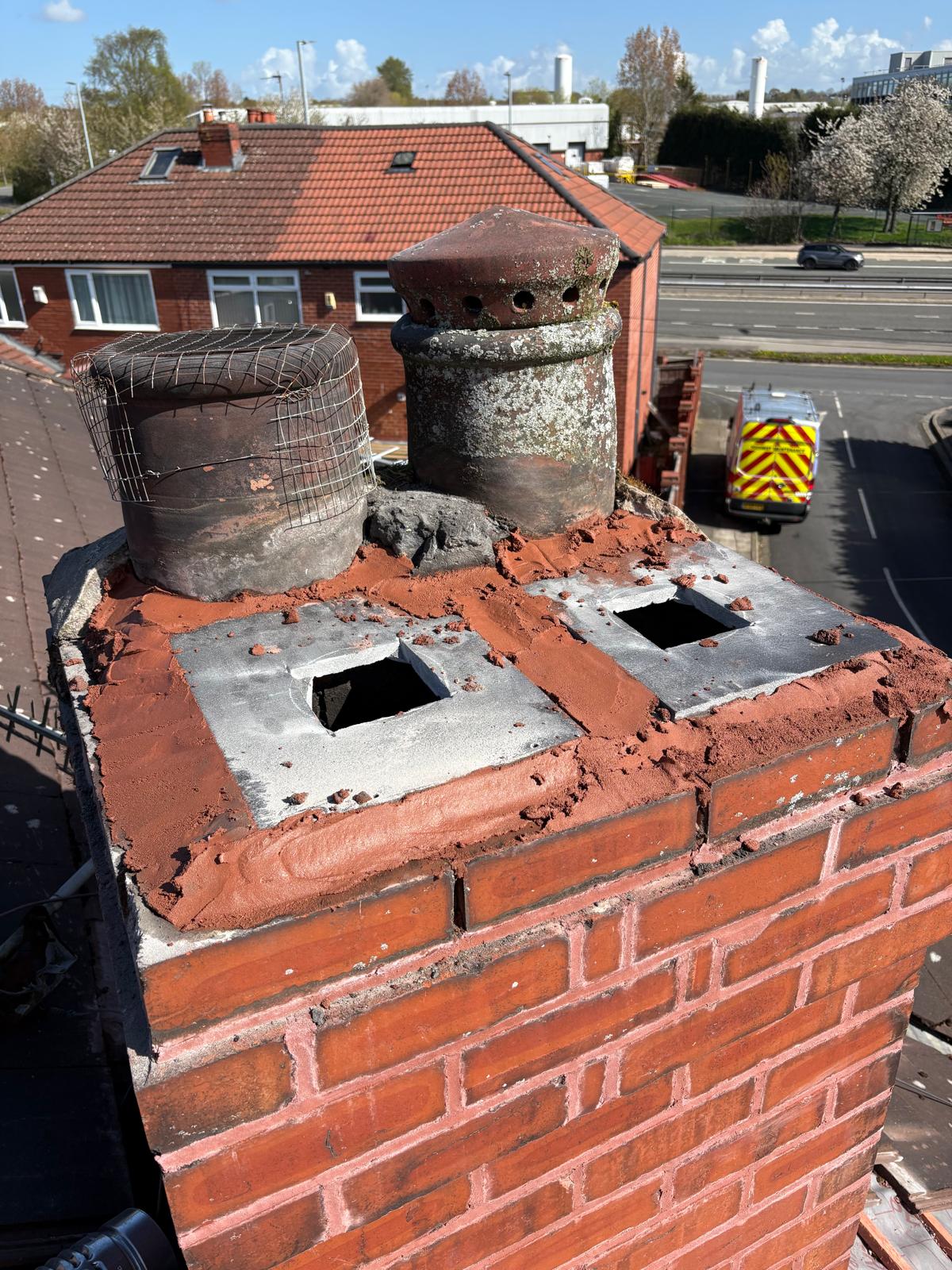
Water Running Down The Inside Of A Chimney Breast
Visible water running down the inside of a chimney breast means rain is getting into the flue itself, not just wetting the brickwork. That is a shorter list of causes than general chimney damp, and it points at the top of the stack: the pot, the flaunching or a cap that is missing or wrong.
Key takeaways
- Running water is different to a damp patch. It means an open route from the sky into the flue.
- An uncapped disused flue is an open pipe, and a stack can collect a genuinely large volume of rain during a storm.
- Soot and tar inside a flue make the water black or brown, and it stains permanently.
- Water running down a live flue can damage the appliance below and should stop it being used until checked.
- This one rarely fixes itself and is worth attending to before winter rather than after.
The difference between damp and running water
A damp chimney breast is moisture that has moved through masonry, and it spreads slowly and diffusely. Water you can see running, or that pools on a hearth, has taken a direct path down an open shaft. That distinction narrows the diagnosis considerably. Masonry damp can come from flashing, from salts, from a sealed flue or from driven rain on the stack face. Running water almost always comes from the top opening, because that is the only route large enough to carry a visible flow. It also means the volume can be significant: a stack with a couple of open flues presents a real catchment area to falling rain, and a heavy shower puts a surprising quantity down it.
The uncapped flue
When a fireplace stops being used, the flue often stays open at the top for years because nothing obvious happens at first. Rain goes down it, soaks into the flue lining and the surrounding brickwork, and disperses without ever showing itself. Then the brickwork saturates, or a lining cracks, and suddenly water appears on the breast or on the hearth. The remedy is a cap that keeps rain out while letting air pass, because a fully sealed flue creates a different problem by trapping moisture inside. Capping cowls designed for disused flues do exactly this, and fitting one is a modest job compared with the damage prolonged water ingress causes to plaster and timber.
The failed flaunching and the loose pot
The mortar bed on top of a stack that holds the pots and sheds water is called flaunching, and it lives in the most exposed position on the entire building. When it cracks, water enters the gap between pot and mortar and runs straight down the outside of the flue lining rather than the inside, which is why it can appear in odd places. A pot that has cracked, or that sits at a visible angle, does the same. From the ground with a zoomed photograph you can often see whether the top of your stack has split mortar, a leaning pot or plant growth, and plants in particular are a reliable indicator, because they need held moisture to survive up there.
Why the water is black
Decades of coal and wood have coated the inside of most older flues with soot and tar deposits. Water running down picks these up, which is why chimney water is so often black or dark brown rather than clear, and why it stains plaster, carpet and hearths so stubbornly. Those deposits are also acidic and hygroscopic, so they attack mortar and pull additional moisture from the air long after the leak has been stopped. This is the reason a chimney breast can keep showing marks after the roof work is done, and why replastering with a suitable salt resistant system is often part of finishing the job properly rather than an upsell.
Not sure what you need? Call and we'll tell you straight.
150+ Google reviews. Dave has 25 years on the tools.
If the fireplace is still in use
Water in a working flue is more than a decorating problem. It can damage a stove or an appliance, it corrodes flue liners, and it can react with soot deposits to produce a strong acidic smell that pushes back into the room. Stop using the appliance until the cause has been found and put right. It is also worth having the flue swept and inspected after any significant water ingress, because a liner that has been repeatedly wetted may not be sound, and a compromised liner is a safety matter rather than a maintenance one. Solid fuel and wood burning appliances in particular depend on the integrity of that liner.
Checking it from the ground
Take a photograph of the stack on a clear day using the maximum zoom your phone allows, from as far back as the garden or street allows, and look at three things: whether each pot is upright and intact, whether the mortar bed around the pots is continuous or split, and whether anything is growing up there. Compare with neighbouring stacks on the same terrace, which were almost certainly built at the same time in the same way and give you a free reference point. Inside, note whether the water appears during rain or after it, and whether it arrives at the top of the breast or lower down. None of this requires height access and all of it is useful to whoever inspects.
What makes a leaking stack urgent
Treat it as urgent if there is any sign the stack itself is unstable, meaning a lean, a missing brick, an open joint you can see from the ground, or a pot that has moved. A stack shedding masonry is a hazard well beyond the damp it causes. Treat it as urgent if the fireplace is still in use, for the reasons set out above, or if any of the water is reaching electrics or a consumer unit. Otherwise it can be planned, and planning it properly is worthwhile because chimney work needs safe access and that access is much of the cost. Get everything on the stack assessed in one visit rather than paying for scaffold twice in consecutive years.
What a lasting repair looks like
Depending on what is found: recutting and renewing the flaunching, rebedding or replacing pots, fitting a capping cowl to any disused flue so it stays dry but ventilated, renewing lead flashing at the roof junction if that is also failing, and repointing or rebuilding the top courses where the brickwork has weathered badly. The thing to avoid is a smear of sealant or a cement cap applied over cracked mortar, which looks like a repair for about two winters and then cracks in the same places, often trapping moisture behind it in the meantime. Ask for photographs of the stack before and after, because you are paying for work you cannot see from the ground. It is also worth asking whether the mortar being used suits the building. Older stacks were built in soft lime mortar, and repointing them in modern cement produces a joint harder than the brick around it, which forces moisture and frost damage into the brick faces instead of the mortar. On a Victorian stack that has already weathered for a century, using the wrong mix accelerates exactly the decay that the repair itself was intended to stop for good.
Frequently Asked Questions
Related services
More from the blog
About the author
David Boardman founded Boardman Roofing in 2018. Dave has 25 years on the tools. Read 150+ Google reviews or call 07879 736629.
Get a free quote today
150+ Google reviews. Dave has 25 years on the tools.
Have a roof problem you want a real roofer to look at? Free written quote, no pressure.